

Introduction
The relay race baton handover is one of the most decisive moments in track and field athletics. It happens in a split second, yet it often determines the outcome of an entire race. Even the fastest sprinters in the world cannot win if their exchange is poorly executed.
In relay events such as the 4×100 meters and 4×400 meters, teamwork matters as much as speed. Coaches train athletes for months to perfect this movement because every fraction of a second matters in competition.
A successful exchange requires timing, coordination, and trust between teammates, making it one of the most technical parts of sprint racing.
Meaning of Baton Exchange
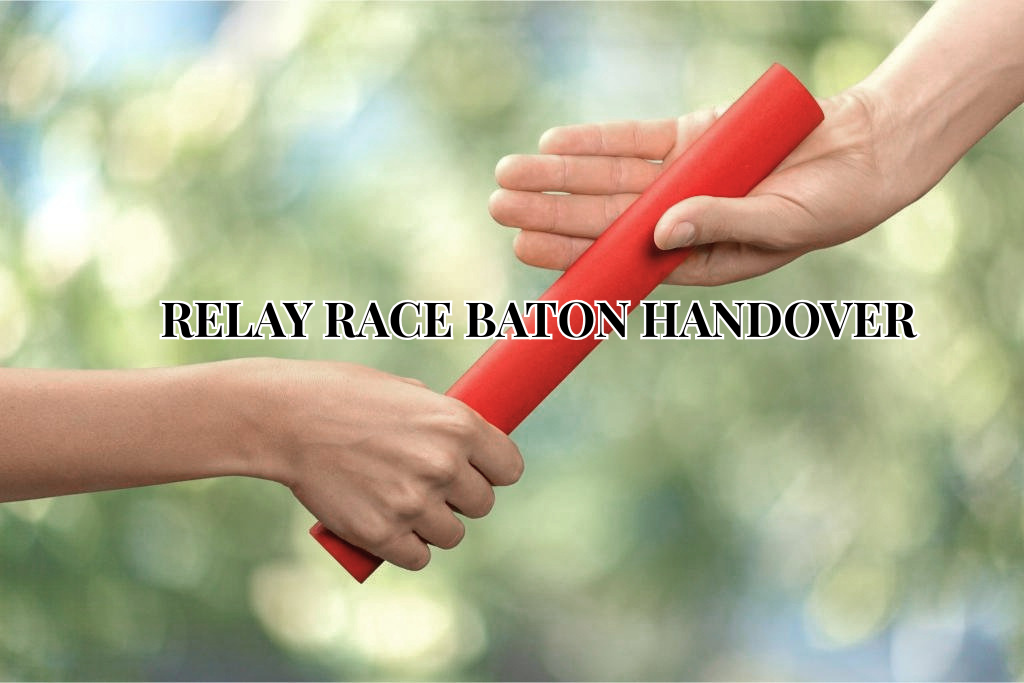
A relay race baton handover refers to the transfer of a baton between two runners within a designated exchange zone. This zone is typically 20 meters long and marked clearly on the track.
The baton must be passed without stopping or dropping it. If the exchange happens outside the zone, the team may be disqualified.
This small but powerful action can decide whether a team wins a medal or loses valuable time.
Importance in Competitive Sports
In professional athletics, a relay race baton handover is often more important than raw sprinting speed. Even a team with slightly slower runners can beat faster opponents with smoother exchanges.
Major competitions like the Olympic Games and World Championships show that races are often decided by milliseconds. A clean exchange helps maintain speed and momentum.
Because of this, coaches treat baton exchanges as a key performance factor in relay success.
Types of Baton Exchange
There are two main techniques used in relay races.
Visual Exchange
The visual method involves the receiving runner looking back at the incoming athlete. This is mainly used in longer relays like 4×400 meters.
It is safer but slightly slower because it reduces running speed during the exchange.
Non-Visual Exchange
The non-visual method is used in shorter races like the 4×100 meters. The outgoing runner does not look back and relies on timing and signals.
It is faster but requires perfect coordination and practice to avoid errors.
| Field | Information |
|---|---|
| Topic Name | Relay Race Baton Handover |
| Sport Type | Track and Field Athletics |
| Main Purpose | Passing baton between runners during relay race |
| Key Skill | Timing, speed, coordination, teamwork |
| Exchange Area | 20-meter exchange zone |
| Common Events | 4×100m relay, 4×400m relay |
| Technique Types | Visual and Non-Visual handover |
| Importance | Helps maintain speed and avoid disqualification |
| Equipment | Lightweight baton (metal or plastic) |
| Training Focus | Acceleration, timing drills, communication |
Rules of the Exchange Zone
relay race baton handover must take place inside the official exchange zone according to international athletics rules, which are strictly followed in competitions. The baton must be passed within the 20-meter zone, and both athletes are required to complete the exchange without stepping outside their designated lanes during sprint relay events.
Throughout the race, the baton must remain in a runner’s hand, as it cannot be thrown or left unattended. If the baton is dropped, the athlete is allowed to pick it up, but they must do so carefully without interfering with other competitors or gaining an unfair advantage. Any exchange made outside the marked zone leads to immediate disqualification, making timing and coordination extremely important. These rules ensure fairness, safety, and consistency in all relay competitions.
Step-by-Step Process
The exchange process follows a strict pattern.
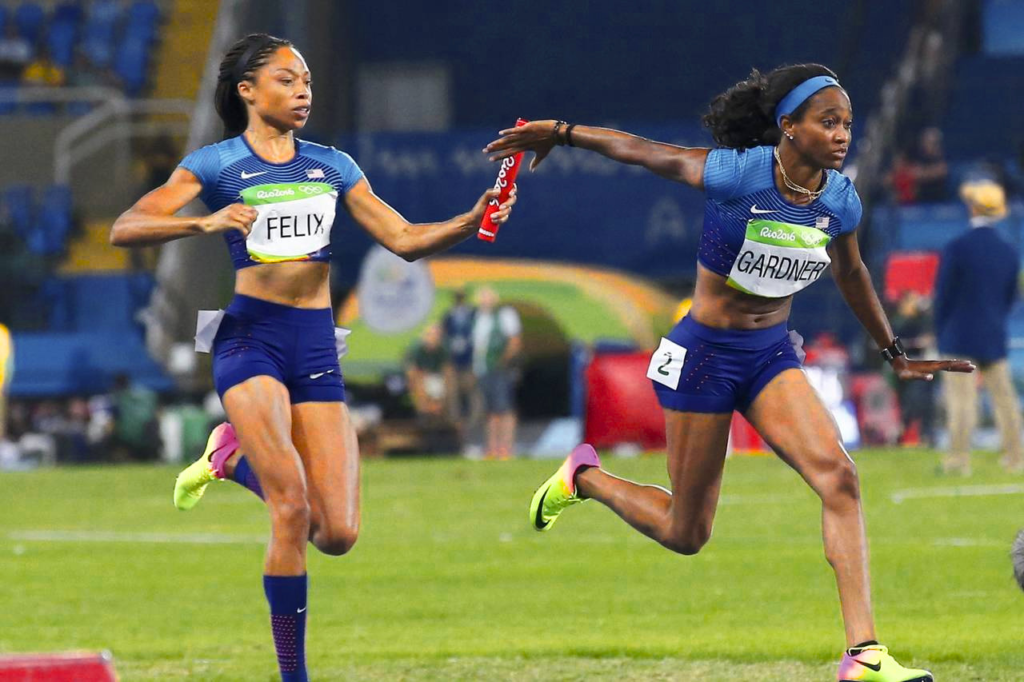
First, the incoming runner approaches at full speed while the outgoing runner begins accelerating early.
Then both athletes match speed inside the exchange zone.
Finally, the baton is passed smoothly without breaking momentum.
Every relay race baton handover is practiced repeatedly to ensure perfection during competition.
Techniques Used by Athletes
Athletes use different hand techniques depending on training style.
The upsweep technique moves the baton upward into the receiver’s hand. The downsweep technique passes it downward. The push pass moves it forward in a straight line.
Each method is designed to make the exchange faster and safer.
Training and Coordination
Teams spend a lot of time practicing baton exchanges to improve timing and trust. Coaches focus on acceleration drills, reaction timing, and repeated exchange practice.
Athletes often repeat the same movement hundreds of times until it becomes automatic.
Communication signals like voice cues or hand gestures are also used to improve accuracy.
Common Mistakes
Many teams lose races due to simple errors during exchange.
Starting too early or too late is a frequent mistake. A weak grip can also lead to dropped batons.
Another major issue is misjudging the exchange zone, which can lead to disqualification even if the team finishes first.
Pressure during major events often increases the chances of mistakes.
Famous Relay Performances
Top relay teams like the United States and Jamaica have shown how important coordination is in international competitions.
Their success is not only due to fast runners but also because of perfectly timed exchanges and strong teamwork.
A well-executed relay race baton handover has helped these teams set world records.
Mental Focus and Trust
Mental strength is essential in relay racing. Athletes must fully trust their teammates during exchanges.
Even a small hesitation can affect timing and performance. That is why teams build strong communication and confidence through training.
Trust ensures smooth execution under pressure.
Equipment Standards
The baton used in official relay races is usually 28–30 cm in length and made from lightweight materials such as metal or strong plastic. Its smooth surface and standard design help athletes grip it easily and transfer it quickly during high-speed running. Bright colors are often used so the baton can be clearly visible even during intense competition and fast movements on the track. Properly designed equipment plays an important role in ensuring smooth exchanges and improving overall team performance during relay events.
Why It Decides Winners
In many races, victory depends not on speed alone but on the quality of exchanges. A smooth baton transfer keeps momentum strong, while mistakes cause delays.
At elite levels, even milliseconds matter, making exchange quality extremely important.
A perfect relay race baton handover can be the difference between gold and defeat.
Conclusion
The relay race baton handover is one of the most important elements in athletics. It combines speed, timing, coordination, and teamwork in a single moment.
From training drills to real competition pressure, every detail matters. Teams that master this skill gain a strong advantage over competitors.
Ultimately, relay success is not just about running fast—it is about executing smooth and precise exchanges under pressure.
FAQs
Q: What is relay race baton handover?
A: It is the process of passing a baton between runners during a relay race inside the exchange zone.
Q: Why is relay race baton handover important?
A: It helps maintain speed, teamwork, and can decide the final result of the relay race.
Q: Where does relay race baton handover take place?
A: It takes place inside the official exchange zone marked on the track.
Q: What happens if relay race baton handover fails?
A: The team may lose time or get disqualified if the baton is dropped or passed incorrectly.
Q: Which relay race baton handover technique is fastest?
A: The non-visual technique is the fastest but requires strong practice and perfect timing.
