

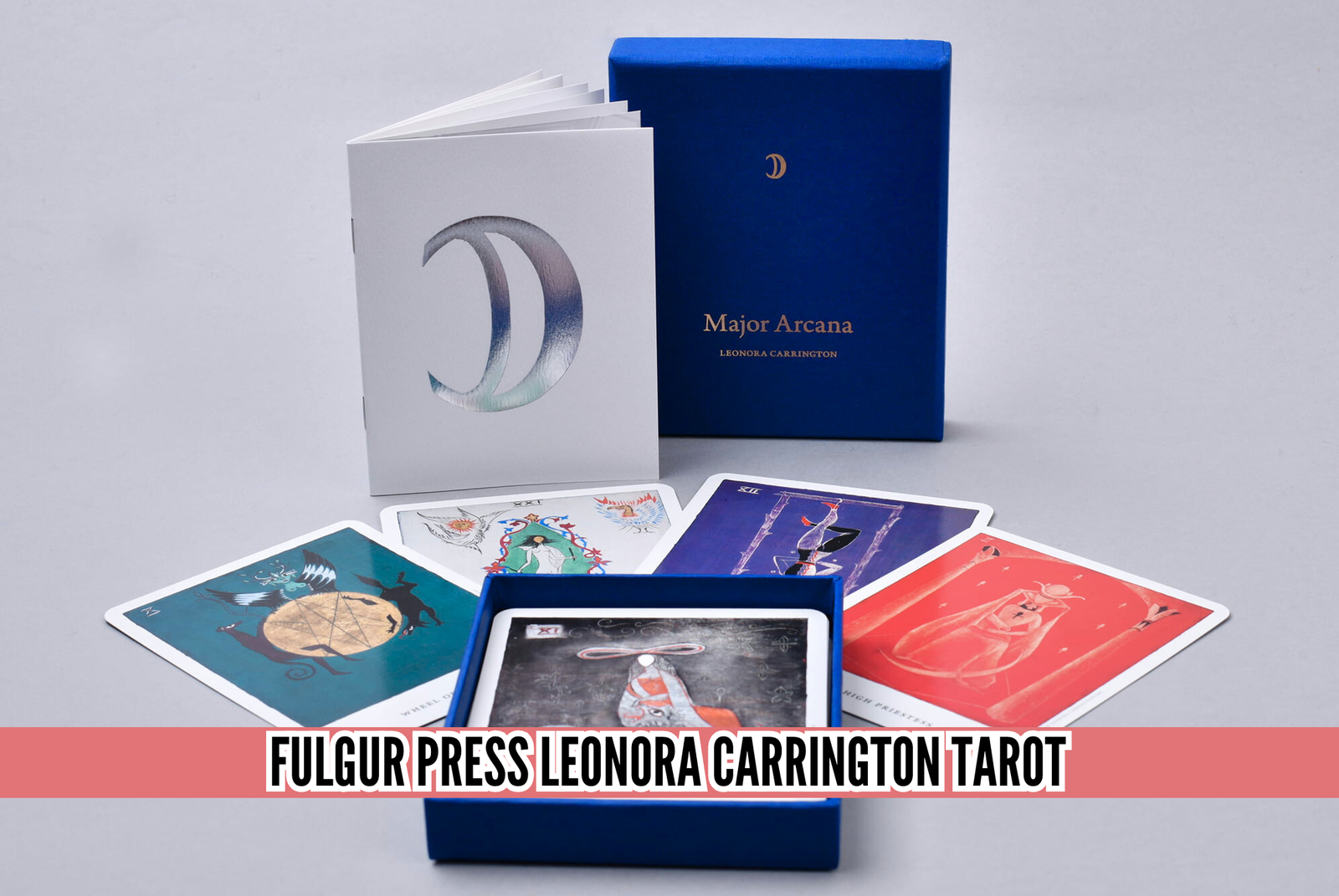
The Fulgur Press Leonora Carrington Tarot is one of the most remarkable rediscoveries in the world of Surrealist art. This deck showcases the visionary mind of Leonora Carrington, a British-born Surrealist painter and writer, who blended mythology, magic, and dreamlike imagery into her unique tarot designs. Created decades ago, her tarot cards remained almost unknown until they were carefully published by Fulgur Press, bringing a lost masterpiece into the public eye.
The deck focuses on the Major Arcana — the 22 central tarot cards — and reflects Carrington’s deep engagement with symbolism, mysticism, and the unconscious mind. Today, it serves not only as a collectible piece of art but also as a tool for reflection and inspiration for tarot enthusiasts, collectors, and art lovers alike. (Fulgur Press)
Leonora Carrington: Life and Artistic Vision
Mary Leonora Carrington was born on April 6, 1917, in Lancashire, England. She came from a wealthy family with strong cultural and Irish influences. From a young age, Carrington rejected conventional education and sought freedom through art and imagination. Her early interest in painting and storytelling led her to study in Florence and later at Amédée Ozenfant’s academy in London.
Carrington discovered Surrealism at the International Surrealist Exhibition in London in 1936. She soon met Max Ernst, and they moved to Paris, where she became deeply involved with Surrealist circles. Her work explored dream imagery, the unconscious, and mystical themes, which would later appear prominently in the Fulgur Press Leonora Carrington Tarot.
During World War II, Carrington faced personal hardships, including a mental breakdown in Spain, experiences that deeply influenced her art and writing. Her memoir, Down Below, recounts this period, showing her resilience and her drive to channel inner experiences into creative expression.
A New Chapter in Mexico
By the early 1940s, Carrington relocated to Mexico City, where she would spend the majority of her life. Mexico provided a rich environment of indigenous myth, ritual, and history, which deeply influenced her art. She became a key figure in Mexico’s Surrealist community and formed close friendships with artists such as Remedios Varo.
Carrington married Emerico “Chiki” Weisz in 1946 and had two sons, Gabriel and Pablo Weisz. Life in Mexico allowed her the freedom to explore new themes, blending European Surrealism with Mexican folklore, alchemy, and mystical symbolism — elements that appear throughout the Fulgur Press Leonora Carrington Tarot.
| Attribute | Details |
|---|---|
| Full Name | Leonora Carrington |
| Born | April 6, 1917, Lancashire, England |
| Died | May 25, 2011 (aged 94), Mexico City, Mexico |
| Nationality | British |
| Profession | Surrealist Painter, Writer |
| Famous Work | Fulgur Press Leonora Carrington Tarot, Paintings, Novels |
| Family | Married Emerico Weisz; 2 sons (Gabriel & Pablo Weisz) |
| Notable Achievements | Renowned Surrealist artist; tarot deck published by Fulgur Press |
| Style | Surrealism, Mythology, Occult Symbolism |
| Social Media | None (Estate/fan pages exist) |
| Net Worth | Not publicly documented |
The Discovery of the Tarot Deck
The tarot deck remained hidden from the public for decades until the late 2010s. During preparations for a 2018 retrospective, curator Tere Arcq discovered a private collection containing 22 hand-painted Major Arcana cards created by Carrington.
These cards were a revelation, showing a side of Carrington’s creativity that had never been studied in depth. Scholars recognized that the deck represented not only her artistic mastery but also her engagement with myth, mysticism, and personal symbolism, which became central to the Fulgur Press Leonora Carrington Tarot publication. (Artnet News)
Fulgur Press: Preserving a Surrealist Treasure
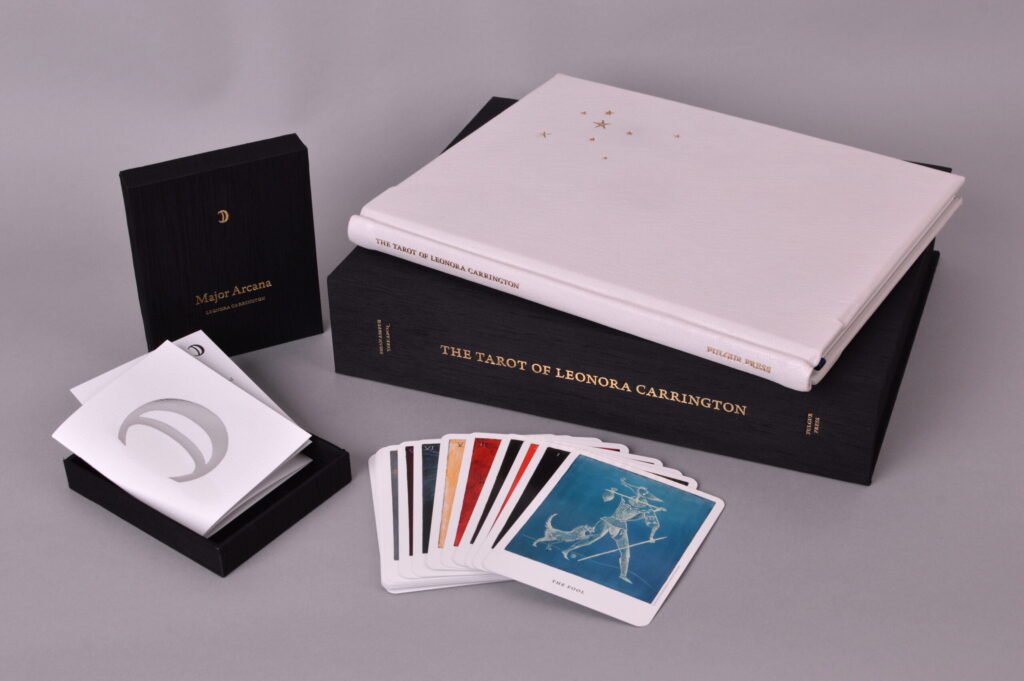
To bring this discovery to the public, Fulgur Press produced The Tarot of Leonora Carrington. The publication includes full-size reproductions of Carrington’s Major Arcana cards, accompanied by essays exploring their symbolism and significance.
The edition also features an introduction by Carrington’s son, Gabriel Weisz Carrington, offering insights into the artist’s life, influences, and creative process. Every card in the Fulgur Press Leonora Carrington Tarot is printed on thick board with vivid colors and subtle touches of gold and silver, highlighting Carrington’s meticulous craftsmanship.
Unique Symbolism and Artistic Style
Carrington’s tarot designs are distinct from conventional decks. While influenced by traditional systems like the Tarot of Marseille and Rider-Waite, her interpretations are deeply personal, blending Surrealist imagery, mythological creatures, and dreamlike landscapes.
For example, her Fool card portrays a trickster figure surrounded by mythical animals, symbolizing chance, intuition, and unconscious exploration. Other cards feature hybrid beings, representing transformation, spiritual awakening, and the merging of human and mythical worlds. The Fulgur Press Leonora Carrington Tarot is therefore valued not only as a tool for divination but also as a rich artistic and symbolic work. (Hyperallergic)
Personal Details About Leonora Carrington
Age and Lifespan: Leonora Carrington was born in 1917 and passed away on May 25, 2011, at the age of 94 in Mexico City.
Family: She married Emerico Weisz and had two sons, Gabriel and Pablo Weisz. Her early life was influenced by her Irish mother and a wealthy English family.
Legacy: Carrington’s work, including her tarot cards, has gained international recognition. In 2024, her painting Les Distractions de Dagobert sold for over £22.5 million, highlighting her lasting impact on the art world.
Social Media: Carrington passed away before social media, but her estate maintains official pages, and many fan communities celebrate her legacy.
The Fulgur Press Leonora Carrington Tarot captures the essence of her life, vision, and mystical interests, serving as both an artistic masterpiece and a reflection of her unique worldview.
Legacy and Continued Influence
The Fulgur Press Leonora Carrington Tarot remains highly sought after by collectors, art enthusiasts, and tarot practitioners. It highlights Carrington’s ability to merge imagination with symbolism, giving viewers insight into her inner world.
The deck emphasizes life’s major themes — transformation, intuition, conflict, and revelation — encouraging self-reflection and personal insight. In Carrington’s hands, tarot transcends fortune-telling, becoming a mirror of the mind and spirit.
Through Fulgur Press Leonora Carrington Tarot, this once-hidden deck now stands as a testament to Carrington’s enduring genius, bridging Surrealism, myth, and mysticism for generations to come.
Conclusion
The Fulgur Press Leonora Carrington Tarot is not just a deck of cards — it is a window into the mind of one of the 20th century’s most extraordinary Surrealist artists. Through her Major Arcana designs, Carrington’s vision of myth, magic, and the subconscious comes alive, offering insight into both tarot symbolism and her creative universe.
Fulgur Press has preserved a hidden treasure, allowing collectors and enthusiasts to explore her genius in a new, accessible form. The deck reflects her life, her spiritual and mystical beliefs, and her fearless creativity. In every card, the Fulgur Press Leonora Carrington Tarot embodies imagination, vision, and the timeless power of art.
FAQs
Q1: What is the Fulgur Press Leonora Carrington Tarot?
A1: It is a published deck of 22 Major Arcana cards created by Surrealist artist Leonora Carrington, showcasing her mystical and artistic vision.
Q2: Who was Leonora Carrington?
A2: She was a British-born Surrealist painter and writer (1917–2011) known for dreamlike art and symbolic storytelling.
Q3: When was the tarot deck rediscovered?
A3: The deck was rediscovered in the late 2010s and later published by Fulgur Press.
Q4: Can the deck be used for readings?
A4: Yes, it can be used for divination, but it is primarily valued as an art and symbolic work.
Q5: What makes this tarot deck unique?
A5: The Fulgur Press Leonora Carrington Tarot blends traditional tarot symbolism with surreal, mythological imagery, reflecting Carrington’s personal vision.
