

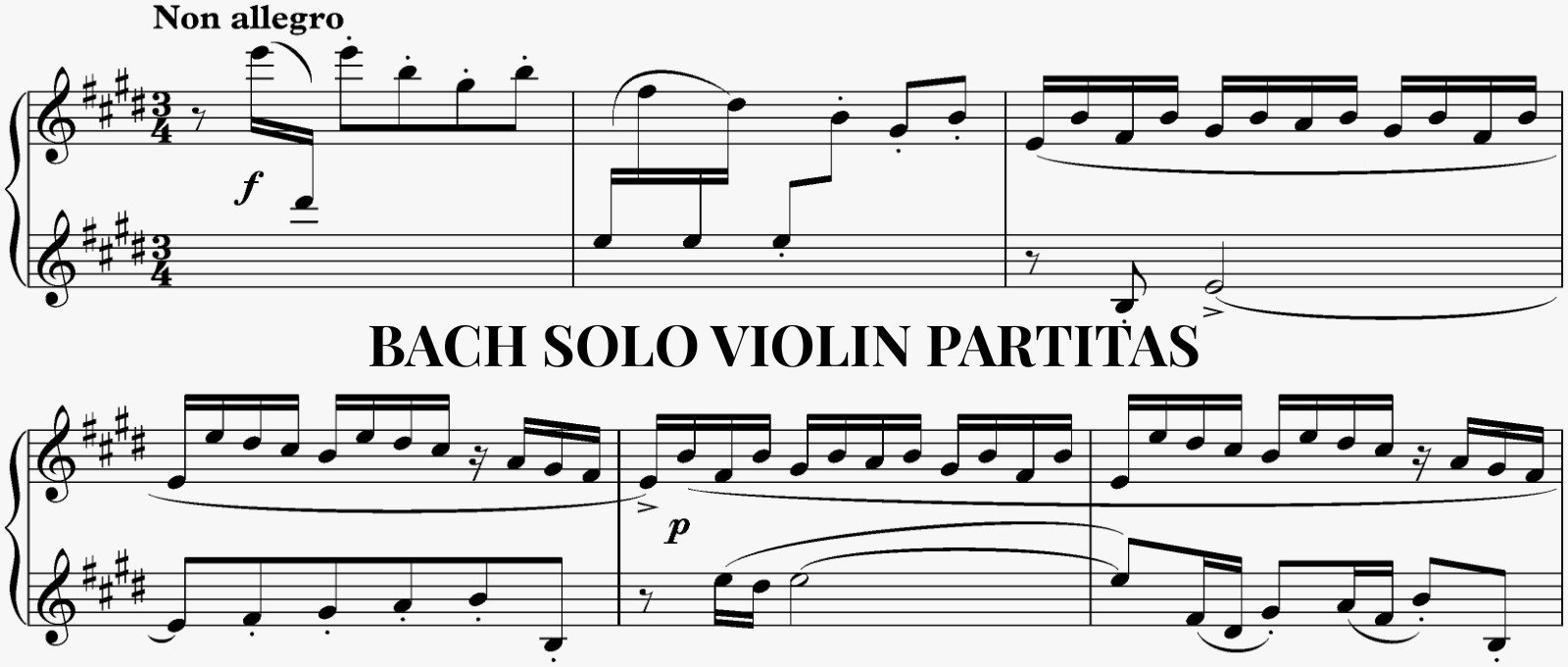
The music of Johann Sebastian Bach has remained influential for more than three centuries, yet very few classical works continue touching listeners as deeply as the Bach Solo Violin Partitas. These extraordinary compositions are admired by violinists, music scholars, teachers, and audiences across the world. Even today, the Bach Solo Violin Partitas are considered among the greatest achievements ever written for solo violin.
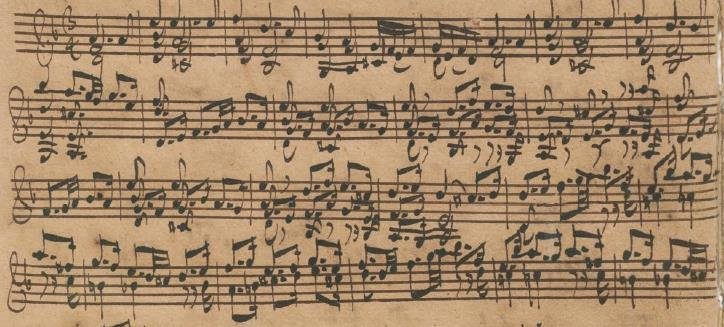
The collection, officially called the Sonatas and Partitas for Solo Violin, was completed around 1720 during Bach’s years in Köthen, Germany. The six compositions became famous for their emotional depth, technical brilliance, and the remarkable way Bach made one violin sound like several instruments performing together. For many violinists, studying the Bach Solo Violin Partitas becomes more than musical practice. It becomes a lifelong artistic journey filled with emotion, discipline, and discovery.
What makes these compositions timeless is their ability to connect directly with human emotion. Although the music was written centuries ago, it still feels modern, honest, spiritual, and emotionally alive. Concert audiences continue responding to the same emotional beauty and complexity that listeners experienced during Bach’s own lifetime.
The Meaning Behind the Bach Solo Violin Partitas
The Bach Solo Violin Partitas collection contains six major compositions divided into two groups. Bach created three sonatas and three partitas for solo violin. The sonatas follow a more serious and church-inspired musical structure, while the partitas are based on elegant dance forms popular during the Baroque era.
The three famous partitas are the Partita No. 1 in B minor, BWV 1002, Partita No. 2 in D minor, BWV 1004, and Partita No. 3 in E major, BWV 1006. Each partita carries its own emotional atmosphere, personality, and musical color.
During Bach’s period, composers usually treated the violin as an instrument that required accompaniment from keyboard or orchestra. Bach completely changed this idea. Through carefully arranged harmonies, chords, and melodic movement, he created the illusion of multiple musical voices speaking together through only one violin.
Bach’s Extraordinary Musical Intelligence
One major reason the Bach Solo Violin Partitas continue fascinating musicians is Bach’s extraordinary understanding of polyphony. Polyphony means several musical lines happening at the same time. Creating this effect on a violin is incredibly difficult because the instrument usually produces only one note at once.
Bach solved this challenge with remarkable creativity and intelligence. He organized notes so carefully that listeners often hear separate musical voices interacting together. At certain moments, the violin sounds as if it is producing bass lines, inner harmonies, and lyrical melodies simultaneously.
This creates exceptional emotional and musical depth. Every phrase feels connected to a larger design, and every movement sounds carefully balanced and structured. Many music scholars describe Bach’s sonatas and partitas as musical architecture because of their organization and beauty.
| Detail | Information |
|---|---|
| Full Name | Johann Sebastian Bach |
| Born | 31 March 1685 |
| Died | 28 July 1750 |
| Nationality | German |
| Profession | Composer, Organist, Violinist |
| Famous Works | Bach Solo Violin Partitas |
| Spouse | Maria Barbara Bach, Anna Magdalena Bach |
| Children | 20 Children |
| Height | Not Officially Recorded |
| Net Worth | Historical figure, exact net worth unknown |
| Social Media | Not Available |
The Legendary Chaconne
Among all six compositions, no movement is more respected or emotionally powerful than the Chaconne from Partita No. 2 in D minor. Many musicians and scholars consider it one of the greatest compositions ever written for any instrument.
The Chaconne usually lasts around fifteen minutes and carries enormous emotional power. Throughout the movement, the music travels through grief, strength, hope, darkness, spirituality, and reflection. Bach transforms a repeating harmonic structure into an emotional experience that feels limitless.
Some historians believe Bach may have composed the Chaconne after the death of his first wife, Maria Barbara Bach. Although there is no complete historical proof, many listeners hear deep sorrow and personal pain inside the music.
What makes the Chaconne extraordinary is its emotional honesty. In one moment the violin sounds powerful and dramatic, while in the next moment it becomes fragile and deeply intimate. Through only one instrument, Bach created music that feels orchestral, emotional, and profoundly human.
Great violinists such as Yehudi Menuhin, Itzhak Perlman, and Hilary Hahn have all recorded celebrated interpretations of the Chaconne. Every performer brings unique emotional colors and ideas to the piece, showing the endless richness inside Bach’s writing.
Bach’s Family and Personal Life
Bach’s personal life remained closely connected to music and family throughout his entire lifetime. He married twice and became the father of twenty children, although several sadly died young because childhood illness was common during the eighteenth century.
His first wife, Maria Barbara Bach, belonged to the extended Bach family. Together they had seven children. After her death in 1720, Bach later married Anna Magdalena Bach, a talented singer who strongly supported his musical work. Their marriage produced thirteen additional children.
Several of Bach’s sons later became respected composers themselves, especially Wilhelm Friedemann Bach, Carl Philipp Emanuel Bach, and Johann Christian Bach. The Bach household was filled with music almost constantly. Family members practiced instruments, copied musical manuscripts, studied compositions, and performed together regularly.
Music was not simply Bach’s profession. It shaped nearly every part of his home life and personal identity.
Bach’s Personality, Lifestyle, and Appearance
Historical descriptions often portray Bach as serious, disciplined, intelligent, and deeply dedicated to his craft. Much of his career involved working for churches, schools, and royal courts. His responsibilities included composing music, directing choirs, teaching students, and performing on organ and violin.
Bach lived a hardworking and structured life rather than a luxurious one. Unlike modern celebrities, he did not seek public attention or fame. His reputation grew naturally because of the quality of his music and the respect he earned from other musicians.
Despite his demanding schedule, Bach remained strongly connected to his family and religious beliefs. He believed music carried spiritual importance as well as educational value. This belief shaped the emotional character of many of his compositions, including the Bach Solo Violin Partitas.
Because photography did not exist during the eighteenth century, modern audiences know Bach’s appearance only through historical portraits and paintings. Most images show him with a broad face, strong facial features, and long curled wigs that were fashionable during the Baroque period. He is usually shown wearing elegant dark formal clothing.
His exact height was never officially recorded, and reliable information about his physical measurements does not exist. Historians focus far more on Bach’s musical genius than on physical appearance. Still, his portraits often project intelligence, seriousness, dignity, and confidence.
Bach’s Financial Life and Net Worth
Modern celebrity-style net worth estimates do not accurately apply to historical figures like Bach. During his lifetime, he earned income mainly through church employment, teaching positions, and composing music for employers and noble courts.
Although Bach was highly respected professionally, he was not extremely wealthy. Financial stability during that historical period depended heavily on maintaining church or court positions. Like many composers of his era, Bach worked continuously to support his large family.
Today, however, Bach’s music represents priceless artistic value. His compositions are performed worldwide in concert halls, universities, films, and recordings. The influence of his work on Western classical music remains immeasurable, and his legacy continues growing through every new generation of musicians.
Why Violinists Deeply Respect These Works
The Bach Solo Violin Partitas are considered among the most difficult and respected works in violin literature. They require extraordinary bow control, precise intonation, rhythmic discipline, emotional maturity, physical endurance, and deep musical understanding.
Unlike flashy virtuoso pieces that focus mainly on speed, Bach’s music exposes every detail of a performer’s technique and interpretation. Even small mistakes become noticeable. For this reason, many violinists both fear and admire these compositions.
At the same time, musicians love these works because they offer endless artistic discovery. Every performance can reveal new emotional meaning, hidden structure, or interpretive insight. Professional violinists often spend decades refining their understanding of Bach because the music never stops teaching them something new.
Influence on Classical Music and Modern Popularity
The Bach Solo Violin Partitas influenced nearly every important violin composer who followed Bach. Musicians such as Niccolò Paganini, Eugène Ysaÿe, and Johannes Brahms deeply admired Bach’s musical writing and learned from his techniques.
Today, conservatories and universities around the world still require advanced violin students to study Bach’s sonatas and partitas because these works develop both technical ability and musical intelligence.
The Bach Solo Violin Partitas also remain highly popular through concerts, recordings, and digital platforms. Legendary violinists including Jascha Heifetz, Nathan Milstein, Hilary Hahn, and Maxim Vengerov have all produced respected recordings of these masterpieces.
Modern platforms such as YouTube, Spotify, and Instagram continue introducing Bach’s music to younger generations around the world. Although Bach himself lived centuries before social media existed, his music remains more visible online today than ever before.
Final Thoughts
The Bach Solo Violin Partitas remain among the greatest achievements in classical music history. Through only one violin, Johann Sebastian Bach created music filled with intelligence, spirituality, emotional honesty, and extraordinary artistic beauty.
These works continue challenging performers and moving audiences because they speak directly to human emotions. The music feels timeless not because it belongs only to the past, but because it still feels deeply alive in the modern world.
From the emotional power of the Chaconne to the elegance of the dance movements throughout the collection, the Bach Solo Violin Partitas continue proving why Bach’s music remains one of humanity’s greatest artistic treasures.
FAQs
Q: What are the Bach Solo Violin Partitas?
A: They are three solo violin compositions written by Johann Sebastian Bach during the Baroque era.
Q: Which movement from the Bach Solo Violin Partitas is most famous?
A: The Chaconne from Partita No. 2 in D minor is the most famous and respected movement.
Q: When were the Bach Solo Violin Partitas composed?
A: Bach completed these works around the year 1720 in Germany.
Q: Why are the Bach Solo Violin Partitas important?
A: They changed violin music forever by making one violin sound like multiple instruments.
Q: Are the Bach Solo Violin Partitas difficult to perform?
A: Yes, they are considered some of the most challenging works in violin literature.
