

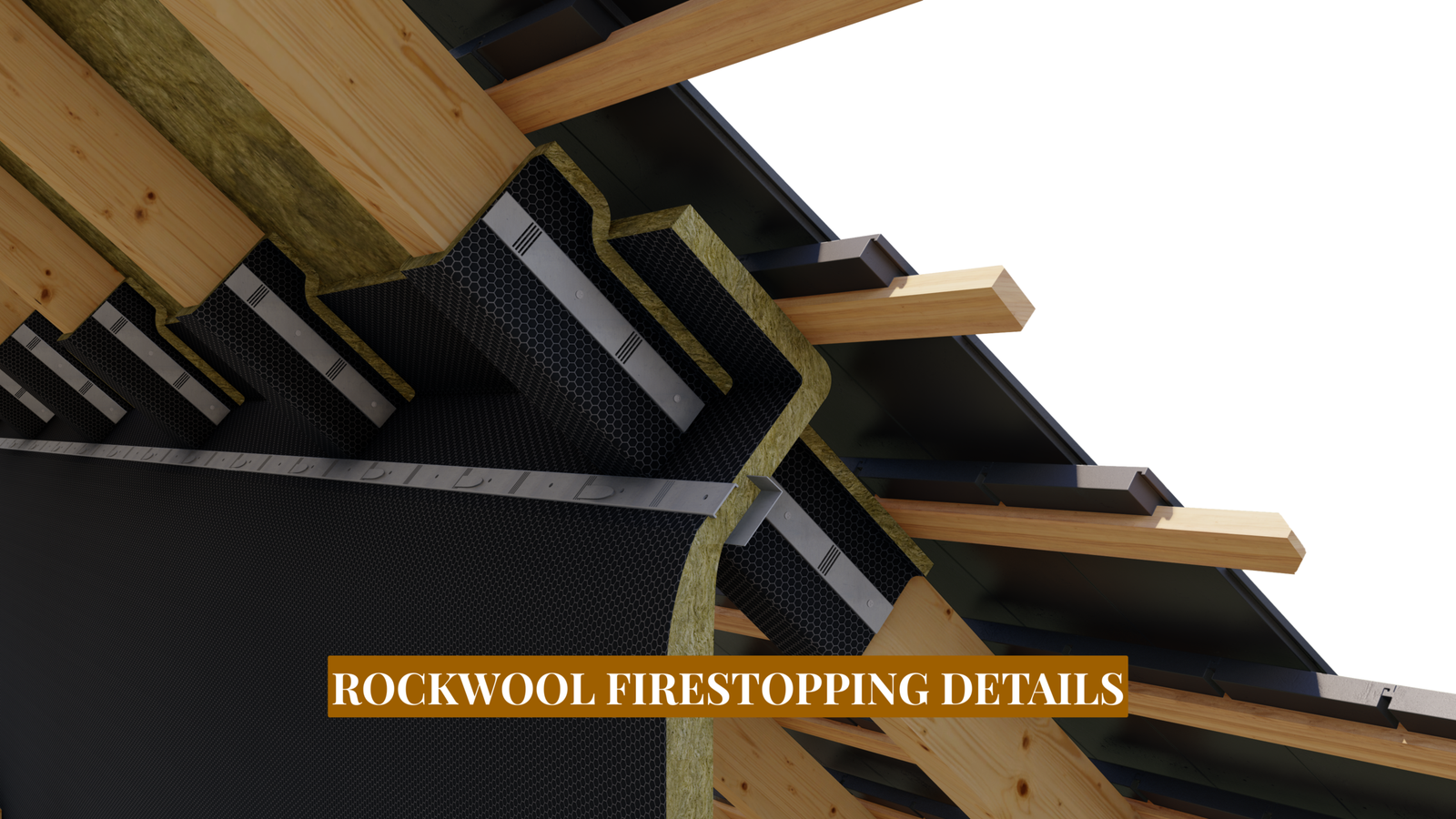
Fire safety has become one of the most important parts of modern construction. Around the world, builders, architects, and engineers are focusing on stronger safety systems that can protect both people and property during fire emergencies. One of the most trusted solutions used in modern buildings today is rockwool firestopping details. These systems are specially designed to stop the spread of fire, smoke, and heat through openings in walls, floors, and ceilings.
Modern buildings contain many service penetrations for pipes, electrical cables, ventilation ducts, and communication systems. While these openings are necessary for building operations, they can also become dangerous pathways during a fire. Flames and smoke can quickly move through these gaps and spread from one room to another. This is why proper firestopping systems are extremely important in construction projects.
ROCKWOOL is one of the leading companies in passive fire protection and stone wool insulation. The company manufactures fire-resistant products that are widely used in commercial buildings, residential towers, hospitals, schools, and industrial facilities. Their systems are trusted because of their high-temperature resistance, durability, and tested performance under strict fire safety standards.
You can visit the official ROCKWOOL Website for technical resources and product information.
Understanding Rockwool Firestopping Details
Rockwool firestopping details are tested installation methods and technical systems used to seal gaps in fire-rated walls and floors. These openings are usually created during construction for plumbing pipes, electrical wiring, HVAC systems, and communication cables.
When a fire starts inside a building, flames and smoke naturally search for open spaces to spread. Even a small unsealed gap can allow smoke and heat to travel rapidly through different parts of a structure. Firestopping systems help block these pathways and maintain the fire resistance of the building compartment.
Rockwool products are mainly made from volcanic stone and recycled materials. The stone wool insulation used in these systems can resist temperatures above 1000 degrees Celsius. Because of this, the material performs extremely well in passive fire protection applications.
The goal of firestopping is not only to slow down flames but also to reduce smoke movement. In many fire incidents, smoke inhalation is one of the leading causes of injuries and fatalities. Proper firestopping systems improve evacuation safety and support emergency response operations.
How Rockwool Firestopping Systems Work
Rockwool firestopping systems work by sealing openings around penetrations and joints. The stone wool insulation acts as a heat-resistant barrier that slows the movement of fire and smoke.
Some Rockwool systems also contain intumescent materials. These materials expand when exposed to high temperatures. During a fire, the expansion seals openings even more tightly and blocks the spread of flames and smoke.
These systems are designed for different types of penetrations, including plastic pipes, metal pipes, electrical cables, cable trays, HVAC ducts, expansion joints, and curtain wall gaps. The systems are tested under international fire safety standards to ensure reliable performance during real fire conditions.
Pipe Penetration Firestopping
Pipe penetrations are one of the most common applications for firestopping systems. Buildings contain water pipes, drainage systems, gas lines, and heating pipes that pass through fire-rated walls and floors.
Plastic pipes create a special challenge because they can melt during a fire. Once the pipe melts away, it leaves an open space where flames and smoke can travel freely. Rockwool firestopping details for pipe penetrations often include stone wool insulation, firestop sealants, fire collars, and intumescent wraps.
These components work together to close openings during fire exposure and maintain the fire rating of the wall or floor. Pipe penetration systems are commonly installed in apartment buildings, hospitals, hotels, and office towers where fire safety regulations are very strict.
Cable Firestopping Systems
Modern buildings depend heavily on electrical and communication systems. Large groups of cables often pass through fire-rated barriers, creating weak points in fire protection systems.
Rockwool cable firestopping systems help seal these openings while still allowing future cable upgrades and maintenance work. These systems are especially important in commercial offices, data centers, industrial buildings, and telecommunications rooms.
One major advantage of these systems is flexibility. Technicians can often add or remove cables without completely rebuilding the firestop system, making maintenance easier and more efficient.
Linear Joint Firestopping
Buildings naturally move over time because of temperature changes, structural loads, and weather conditions. Expansion joints are designed to absorb this movement and prevent cracking.
However, these joints can also become dangerous fire pathways if not protected correctly. Rockwool linear joint firestopping systems are designed to handle both movement and fire resistance at the same time. These systems remain flexible while maintaining compartmentation during a fire emergency.
Linear joint systems are commonly used between floor slabs, wall joints, curtain walls, ceiling systems, and roof connections. As modern buildings become taller and more complex, expansion joint fire protection has become increasingly important.
Curtain Wall Firestopping Systems
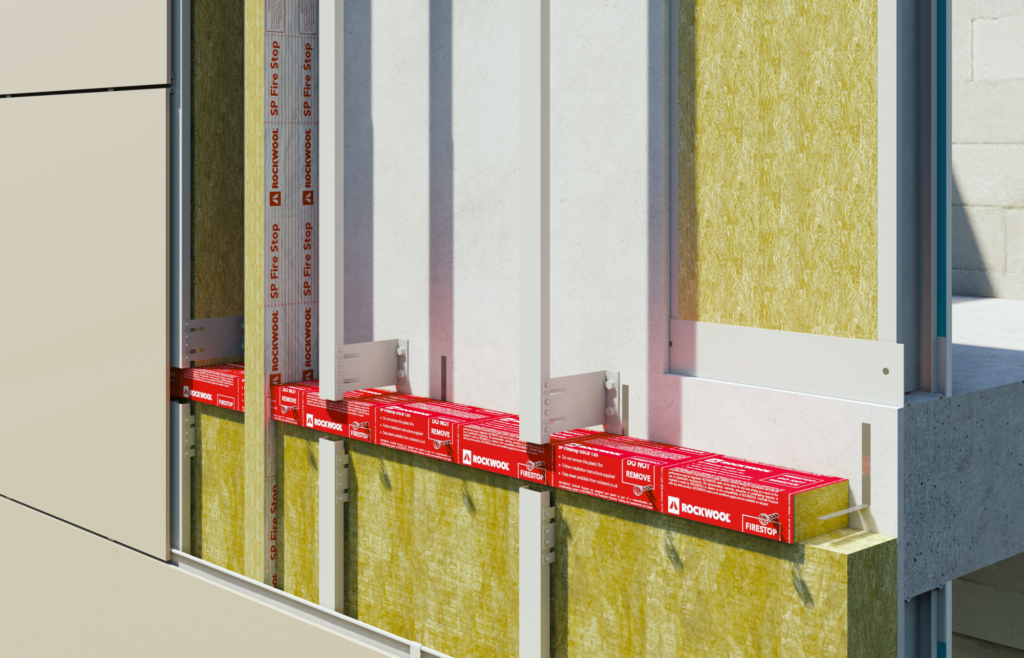
High-rise buildings often use curtain wall facades made from glass and aluminum. The gap between the floor slab and curtain wall can allow fire to spread vertically between floors.
Rockwool perimeter fire containment systems are designed to seal these perimeter gaps and reduce vertical fire spread. These systems are widely used in shopping malls, hotels, airports, residential towers, and commercial skyscrapers.
Curtain wall firestopping has become a major focus in modern building safety because exterior fire spread can be extremely dangerous in tall structures. Proper perimeter fire barriers improve safety for both occupants and firefighters.
Benefits of Rockwool Firestopping Details
One major reason why Rockwool products are widely used is their strong performance benefits. Stone wool materials can withstand extremely high temperatures without melting or producing dangerous smoke. This helps slow down fire spread and protect building compartments during emergencies.
Rockwool systems also help reduce smoke leakage. Smoke can move quickly through unsealed gaps and create dangerous conditions for occupants. Proper firestopping systems improve safety by limiting smoke movement between compartments.
Another important benefit is acoustic performance. Stone wool insulation helps reduce sound transmission, making it useful in apartments, schools, hospitals, and office buildings where noise control is important.
Rockwool materials also resist water absorption and maintain performance in humid conditions. The insulation remains stable for many years and resists shrinking, cracking, and deterioration. Many stone wool products are also manufactured using recycled materials and energy-efficient production methods, supporting sustainable construction goals.
Testing and Fire Safety Standards
Firestopping systems must be properly tested before they can be used in construction projects. Rockwool firestopping details are commonly tested under standards such as ASTM, UL Systems, EN Standards, and BS Standards.
These tests measure important performance factors including fire resistance duration, smoke leakage, structural stability, and thermal insulation performance. Many systems are rated for one hour, two hours, three hours, or even four hours depending on the application and design.
Using tested systems is extremely important because untested materials may fail during real fire conditions. Builders and engineers usually follow detailed manufacturer drawings and certified installation methods to ensure compliance with fire safety regulations.
Installation Process
Correct installation is critical for firestopping performance. Even high-quality products may fail if installed incorrectly. Professional contractors usually follow detailed manufacturer instructions during installation.
The process typically begins with inspecting the opening and cleaning surrounding surfaces. Contractors then measure the penetration size and install the required stone wool insulation. Firestop sealants, collars, or wraps are then applied to complete the system. Finally, the installation is inspected and documented to ensure compliance with fire safety standards.
Regular inspections are also important because damaged or missing firestop systems can reduce the effectiveness of passive fire protection.
Environmental Benefits of Stone Wool
Modern construction increasingly focuses on sustainability and energy efficiency. Rockwool stone wool products support these goals in several ways. The insulation improves building energy performance by reducing heat transfer, which can lower heating and cooling costs over time.
Stone wool products are also known for their long service life, recyclable materials, reduced carbon emissions, and thermal efficiency. Because of these advantages, many green building projects include stone wool insulation systems as part of their sustainability strategies.
The Future of Rockwool Firestopping Details
Fire safety technology continues evolving as buildings become smarter and more advanced. Future firestopping systems may include digital inspection tools, improved installation tracking, and stronger material performance.
The demand for passive fire protection is expected to grow because governments and safety organizations are placing greater focus on building safety regulations. Rockwool continues investing in research, testing, and sustainable fire protection systems that meet modern construction needs.
As cities continue growing and buildings become more complex, reliable firestopping systems will remain one of the most important parts of safe construction practices worldwide.
Final Thoughts
Rockwool firestopping details have become an essential part of modern building safety. These systems help stop the spread of fire, smoke, and heat through walls, floors, and structural joints. From pipe penetrations to curtain wall systems, Rockwool solutions provide reliable passive fire protection for many different types of buildings.
Their stone wool technology offers excellent fire resistance, durability, acoustic performance, and sustainability benefits. As construction technology continues evolving, properly tested firestopping systems will remain critical for protecting lives, property, and infrastructure.
FAQs
Q: What are rockwool firestopping details?
A: Rockwool firestopping details are tested systems used to stop fire, smoke, and heat from spreading through walls, floors, and building openings.
Q: Why are rockwool firestopping details important?
A: Rockwool firestopping details help improve building safety by maintaining fire-rated barriers and protecting escape routes during emergencies.
Q: Where are rockwool firestopping details commonly used?
A: Rockwool firestopping details are widely used in hospitals, offices, apartments, schools, hotels, and industrial buildings.
Q: How do rockwool firestopping details work?
A: Rockwool firestopping details use stone wool insulation and fire-resistant materials to seal gaps and reduce fire and smoke spread.
Q: Are rockwool firestopping details environmentally friendly?
A: Yes, rockwool firestopping details use durable stone wool materials that support energy efficiency and sustainable construction practices.
