

Introduction
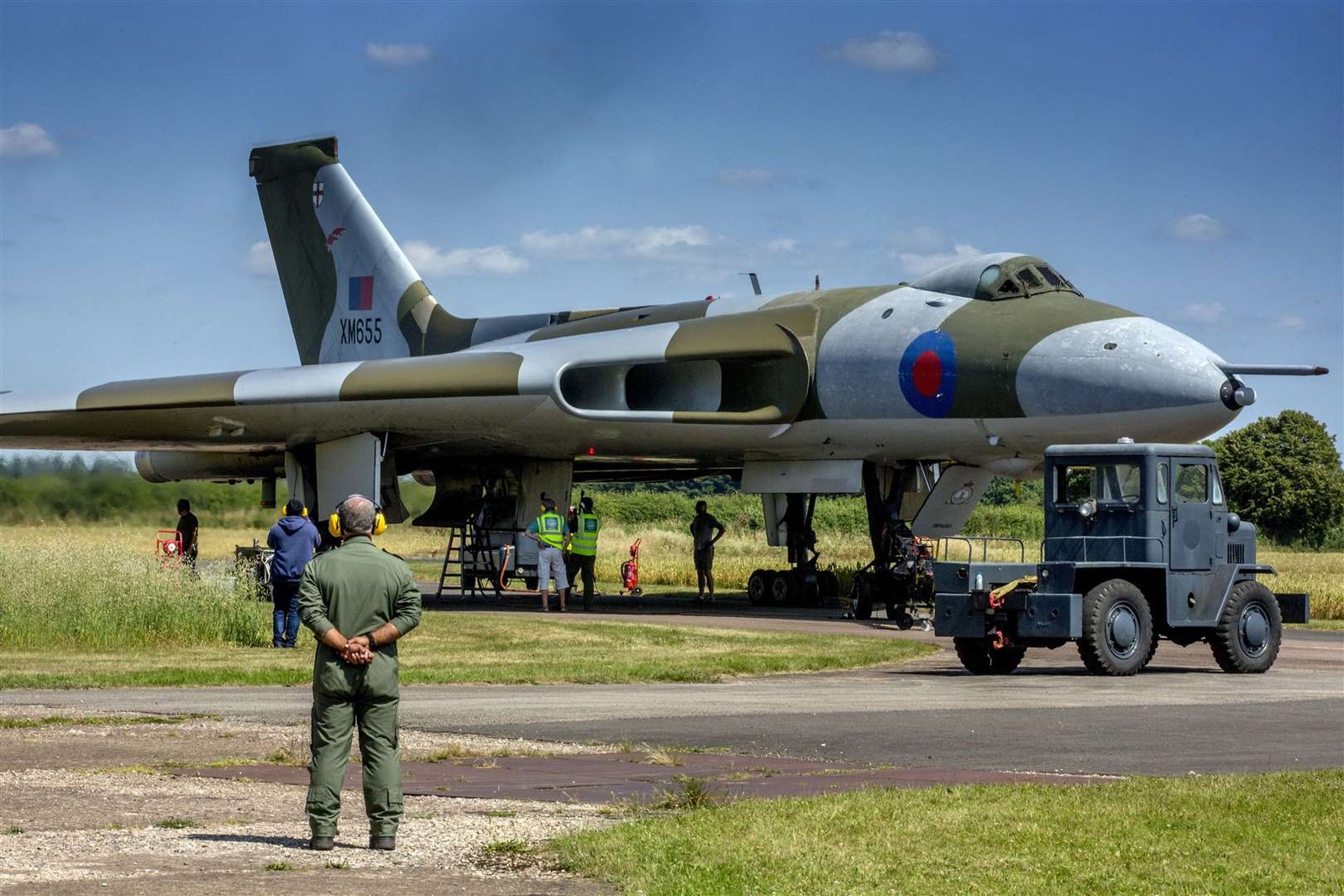
The Vulcan Bomber Wellesbourne (XM655) is one of the most remarkable surviving aircraft from Britain’s Cold War aviation history. Located at Wellesbourne Mountford Airfield in Warwickshire, England, this iconic bomber continues to attract aviation enthusiasts, engineers, historians, and visitors from around the world. Unlike many retired military aircraft that are placed permanently in museums, the Vulcan Bomber Wellesbourne has been preserved in a rare operational condition where it can still start engines and perform taxi demonstrations.
This aircraft is not only a historical exhibit but also a working reminder of Cold War defence engineering, representing decades of British aerospace innovation and volunteer dedication.
Cold War Origins and Development
The aircraft was built in 1964 by Avro as part of Britain’s V-bomber programme during the Cold War. At that time, global tensions required long-range strategic bombers capable of delivering nuclear deterrent capability. The Vulcan Bomber Wellesbourne became part of this critical defence system, reflecting the peak of British aviation design and military planning.
Its delta-wing configuration was highly advanced for its era. The design allowed excellent lift, stability at high speeds, and strong performance at altitude. Engineers focused on creating an aircraft capable of long-range missions while maintaining reliability and strength.
During this period, the Vulcan Bomber Wellesbourne symbolized national defence power and technological progress in a rapidly changing world.
RAF Service History
During its Royal Air Force service, the aircraft played a key role in Britain’s strategic deterrent operations. Although it never saw combat, it was actively used in training missions, readiness exercises, and long-range operational simulations designed to prepare crews for Cold War scenarios.
By the early 1980s, military strategy began shifting toward missile-based systems, reducing reliance on manned bombers. As a result, the aircraft was officially retired from RAF service in 1984, ending its active military role.
Preservation at Wellesbourne Airfield
After retirement, the aircraft was saved from scrapping and relocated to Wellesbourne Mountford Airfield. This decision ensured its survival in a near-complete condition, unlike many other aircraft of its era.
A dedicated team of volunteers now maintains it with exceptional care. Their responsibilities include engine maintenance, hydraulic system servicing, structural inspections, and preservation of original components. Thanks to this ongoing work, the Vulcan Bomber Wellesbourne remains capable of taxiing under its own power, which is extremely rare for a Cold War bomber.
Engine Runs and Public Demonstrations
One of the most impressive features of the aircraft is its live engine runs and taxi displays. During special events, its four Rolls-Royce Olympus turbojet engines are started, producing a deep and powerful sound that spreads across the airfield.
When the Vulcan Bomber Wellesbourne begins moving, spectators experience a rare moment in aviation history. The combination of sound, motion, and scale creates a powerful connection to Cold War engineering.
Although it no longer flies, these demonstrations provide a vivid glimpse into its operational past.
2022 Runway Incident
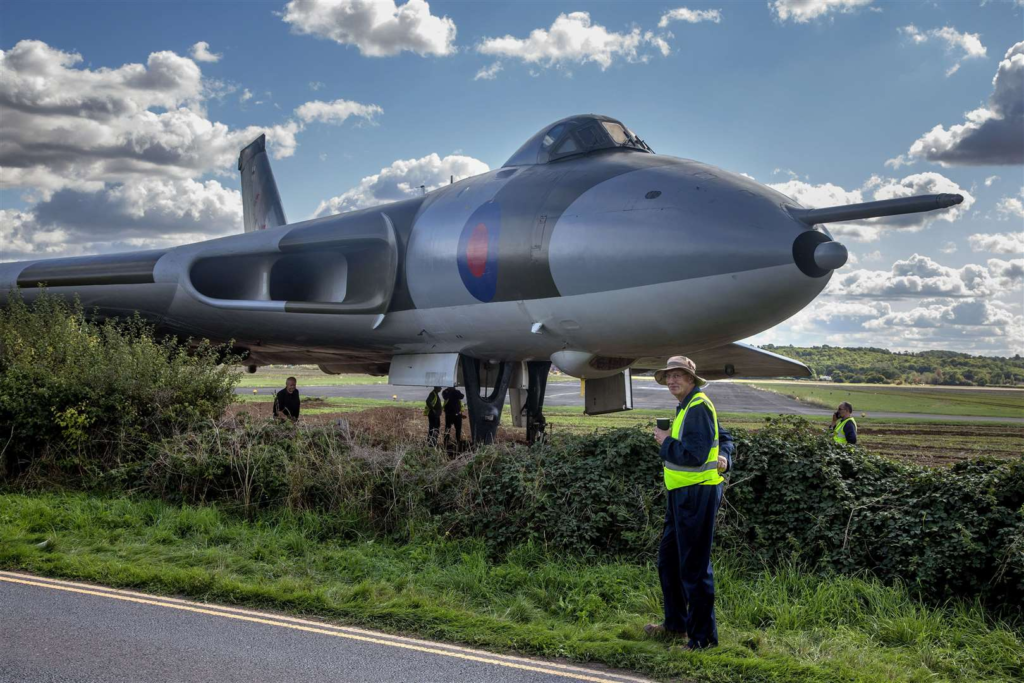
In September 2022, the aircraft became widely reported after overshooting the runway during a taxi run and entering a soft ground area near the airfield boundary.
Fortunately, there were no injuries, and the aircraft did not suffer serious damage. The Vulcan Bomber Wellesbourne was later recovered and returned safely to its display position after inspection.
This event highlighted the complexity and risk involved in operating such a large historic aircraft even during ground movement.
Design and Physical Characteristics
The aircraft remains one of the most visually striking military machines ever built. Its delta-wing shape gives it a futuristic appearance that still feels modern decades after its introduction.
Its approximate measurements are:
- Length: 30 metres
- Wingspan: 33 metres
- Height: 8 metres
Inside, the cockpit remains fully analogue, with mechanical switches, gauges, and systems typical of 1960s aviation technology. Despite its age, the aircraft remains structurally strong due to continuous maintenance and preservation efforts.
Standing near it gives visitors a strong sense of Cold War engineering scale and ambition.
Aircraft Lineage
The aircraft belongs to the wider Avro Vulcan family developed during the Cold War. Each variant was designed for strategic defence and nuclear deterrent roles, sharing similar aerodynamic principles and mission objectives.
While other Vulcans are preserved in museums, very few remain capable of powered ground movement. This makes the Vulcan Bomber Wellesbourne one of the most active surviving examples of its type.
It remains an important link between modern aviation and Cold War aerospace history.
Value and Historical Importance
Although it has no commercial market value, aviation experts estimate its preservation value could reach millions of pounds due to rarity, condition, and historical importance.
However, its true value is cultural and educational. The Vulcan Bomber Wellesbourne represents Cold War defence strategy, British aerospace innovation, and decades of volunteer dedication.
For historians and aviation enthusiasts, it is an irreplaceable piece of living heritage.
Current Life at Wellesbourne Airfield
Today, the aircraft lives a quiet but active retirement at Wellesbourne Airfield. It no longer performs military operations but is carefully maintained for occasional engine runs and public taxi events.
Visitors travel from across the UK and abroad to see the Vulcan Bomber Wellesbourne in action. Aviation communities also share its appearances online, helping preserve its legacy in modern media.
Even without official social media accounts, it remains widely recognized and respected.
Cultural Legacy
Beyond its technical importance, the aircraft holds deep cultural significance. It represents an era when aviation played a central role in global defence strategy and technological advancement.
For many visitors, seeing the Vulcan Bomber Wellesbourne in motion creates an emotional connection to history. It brings Cold War aviation into the present in a way that static displays cannot replicate.
Its preservation ensures future generations can understand and appreciate this important part of aviation heritage.
Conclusion
The Vulcan Bomber Wellesbourne (XM655) remains one of the most significant surviving Cold War aircraft in the United Kingdom. From its construction in the 1960s to its retirement in 1984 and its careful preservation today, the aircraft has undergone a remarkable journey.
Now based at Wellesbourne Airfield, it continues to inspire visitors through its rare engine runs and taxi demonstrations. It is far more than a machine—it is a living symbol of engineering excellence, historical preservation, and Cold War aviation heritage.
FAQs
Q: What is Vulcan Bomber Wellesbourne?
A: Vulcan Bomber Wellesbourne is a preserved Cold War aircraft (XM655) located at Wellesbourne Airfield in the UK.
Q: Is Vulcan Bomber Wellesbourne still operational?
A: It cannot fly, but Vulcan Bomber Wellesbourne can still perform engine runs and taxi demonstrations.
Q: Where is Vulcan Bomber Wellesbourne kept?
A: Vulcan Bomber Wellesbourne is based at Wellesbourne Mountford Airfield in Warwickshire, England.
Q: Why is Vulcan Bomber Wellesbourne famous?
A: Vulcan Bomber Wellesbourne is famous for its Cold War history, delta-wing design, and live ground engine displays.
Q: Who maintains Vulcan Bomber Wellesbourne?
A: Vulcan Bomber Wellesbourne is maintained by a team of dedicated volunteers and aviation enthusiasts.
